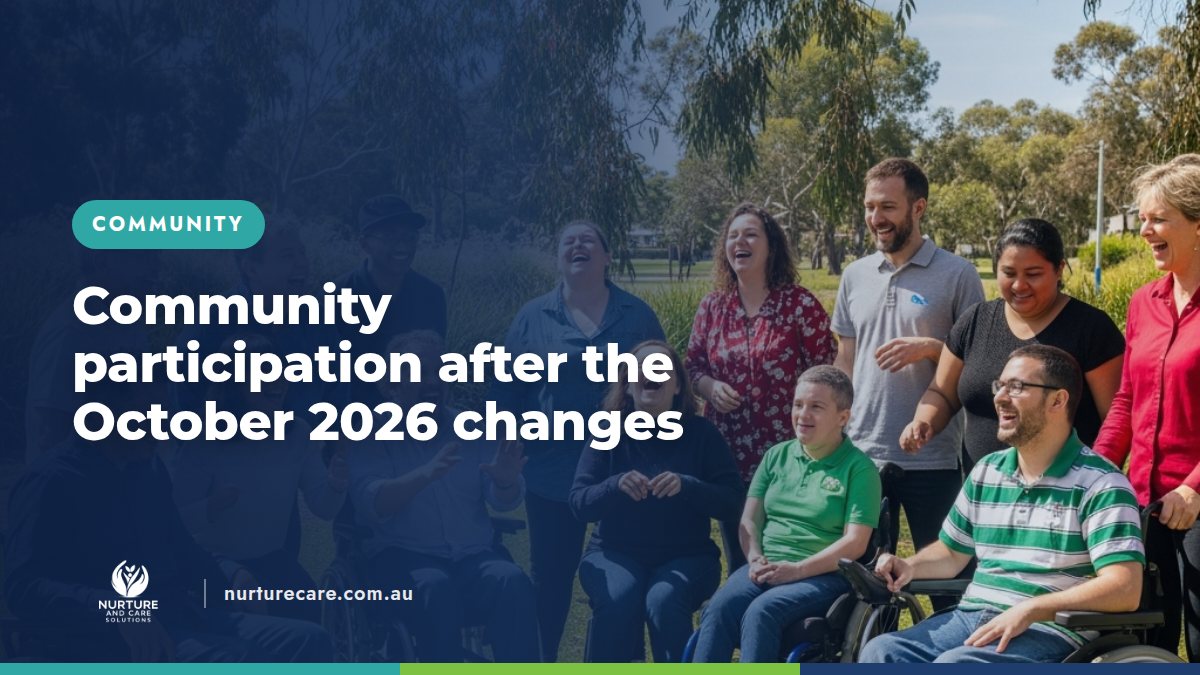

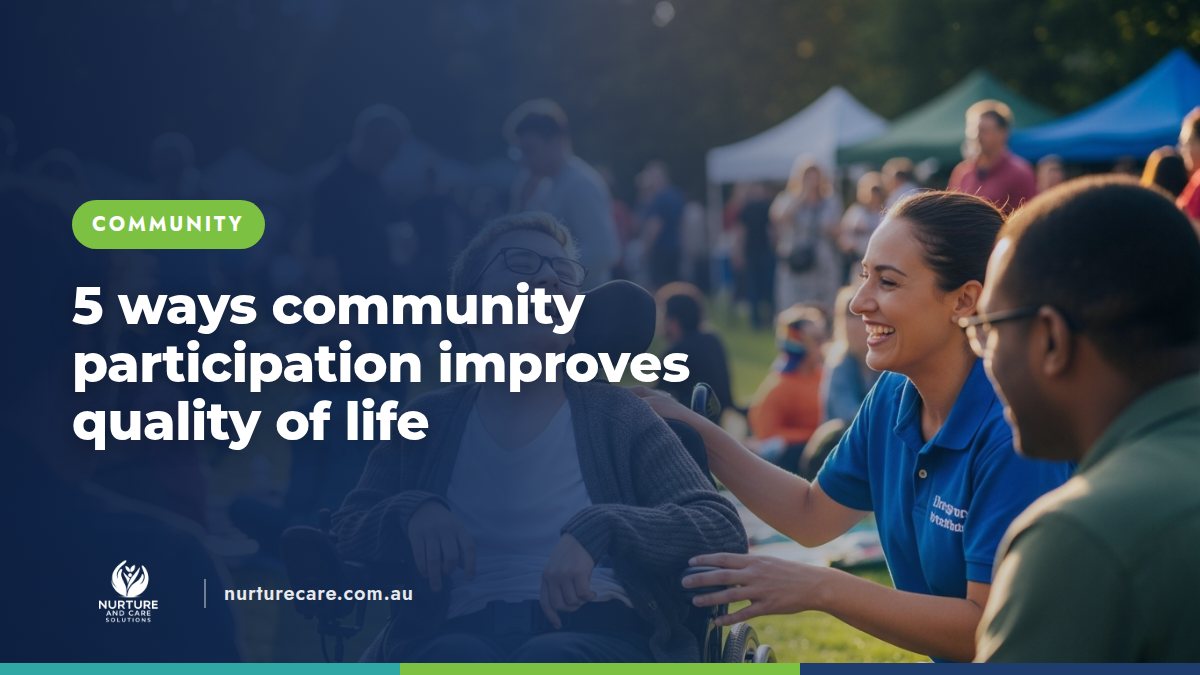
Community participation is often described as the heart of the NDIS, and for good reason. Research on social inclusion consistently links regular community involvement with better mental and physical health, stronger independence and a longer life. Here are five ways it changes everyday life, and practical ways to make each one happen.
1. It builds real friendships
Loneliness is one of the most common experiences reported by people with disability. Regular, repeated contact in the same place with the same people is how friendships form, whether that is a Tuesday art group, a Saturday parkrun or a weekly choir. The key is consistency rather than variety.
2. It grows confidence and skills
Ordering a coffee, catching a bus, handling money and asking for help are skills learned by doing. A support worker's job is to coach, then step back. Travel training is a good example: a few months of support can replace years of dependence.
3. It improves physical and mental health
Movement, sunlight, routine and purpose all come with community activity. Inclusive sport, community gardens and volunteering provide them for very little money.
4. It opens doors to study and work
Volunteering, short courses and clubs are where employers and educators notice people. Many participants' first paid job came from a volunteering role or a community connection.
5. It gives families a break and participants a life of their own
Time apart is healthy for everyone. Participants develop an identity beyond the family, and carers get space to rest.
Making it happen in 2026-27
From 1 October 2026 the NDIA is reducing Social and Community Participation budgets in new and reassessed plans, so efficient use of hours matters. Group ratios, natural supports and free local activities all help. Our guide to 15 low-cost community ideas in Sydney has practical suggestions, and our community participation service is built around your goals.
General information. Funding depends on your individual plan.